Modular toys and children's creativity: why the open choice is better
When you're standing in a toy shop looking at everything from plastic superheroes to wooden cars, there is one approach that consistently delivers more play value: modular toys. These are toys with no single right way to play, where the child builds the scenario, the town and the story themselves.
That is the idea behind open, modular toys: the child decides what it should be, and can build, plan and play with others in many different ways. Crateit Town and Crateit Roomies are both designed on this principle, and it's one of the main reasons our products often end up as a family's longest-lasting toys.
What does modular toy mean?
Modular toys are made up of smaller parts that can be combined in many different ways. Crateit Town is a good example: road pieces, houses, cars. Each part works on its own, but the set's real potential lies in the combination.
The opposite is a fixed toy. A ready-built plastic pirate ship has one right shape. A superhero figure has one right pose. A battery-operated car does one thing when you press the button. That isn't bad, just closed.
Why are modular toys so good for creativity?
1. Endless combinations mean endless play
A fixed playset has one ideal layout. Once the child has built it, there is nothing more to do, and the play moves on to the next cupboard. A modular playset has potentially millions of layouts. That means the child comes back to the same toy again and again, because they have never seen "all" of it.
2. The child becomes the designer, not just the user
When the child decides where the road goes, where the car parks and where the fire station stands, they are actively practising design thinking. It's a completely different kind of brain activity from "unfolding" a finished scenario.
3. Frustrations become problem-solving
Modular toys naturally create small problems: the road doesn't fit. The car needs to get out. Where do I put the fire station? These problems aren't design flaws, they're chances to learn. The child practises finding solutions, making compromises and rethinking the plan.
4. Siblings and friends can play together
With modular toys, several children can each build their own part and connect them. It naturally invites cooperation, negotiation and shared ownership of the end result.
What age are modular toys suitable for?
Modular toys work from age 2 and up. What's interesting is how differently they're used across age groups:
| Age | Typical use | What the child practises |
|---|---|---|
| 2-3 years | Puts parts together, pulls them apart, puts things inside | Fine motor skills, cause and effect |
| 4-5 years | Builds small scenarios, plays role-play | Language, storytelling, sequencing |
| 6-7 years | Builds complex towns, plans ahead | Planning, spatial thinking |
| 8-10 years | Takes on the role of "designer", invites friends | Cooperation, compromise, leadership |
Modular wood vs modular plastic
The classic modular plastic toy is LEGO. The classic modular wooden toy is building blocks or systems like Crateit Town. Both are good, but there are differences:
- LEGO is very detailed and can be built into very complex structures. The downside: small parts can go missing, and the play is very focused on building.
- Wooden toys are typically sturdier with larger parts. Less risk of losing pieces, more focus on role-play.
Many families have both, it's not either-or. But if you need to pick one place to start, wooden toys are typically more accessible for younger children (3-5 years) and last longer.
How to choose the right modular toy
Our three criteria:
1. Can it be expanded?
A good modular play system has a range of add-ons. Crateit Town has 10+ sets that all fit together. When the child has filled the whole table and wants more, there is something to add.
2. Do individual parts make sense on their own?
It's important that each part works without the rest of the collection. A Crateit Town bus is fun in its own right, not just as part of a bigger town. That means gifts can start small.
3. Does it hold up physically?
Modular toys get handled a lot. They need to withstand 5-10 years of daily use. Quality wooden toys (wood fibre (MDF)) meet this requirement, while cheap plastic typically gives up after 1-2 years.
Crateit as a modular ecosystem
The Crateit range is built as a modular ecosystem on several levels:
- Within Town: all road pieces, houses and cars combine.
- Within Roomies: all rooms and furniture combine.
- Across ranges: Town and Roomies can be set up together so the cars from Town park by the Roomies house.
- Within the series products: the Dinosaur, Stella and Mermaid series have their own worlds but can also be built together with Town.
That means a Crateit collection grows naturally over the years, and every new set adds play value to the whole collection, not just the new set.
Our recommended Crateit favourites
Ready to get started? Here are three popular Crateit products you can take home today.

Around The Mountain
A mountain pass with tunnels and bends. The physically largest single set in Town, and it can be built together with all other Town roads.
DKK 399
VIEW PRODUCT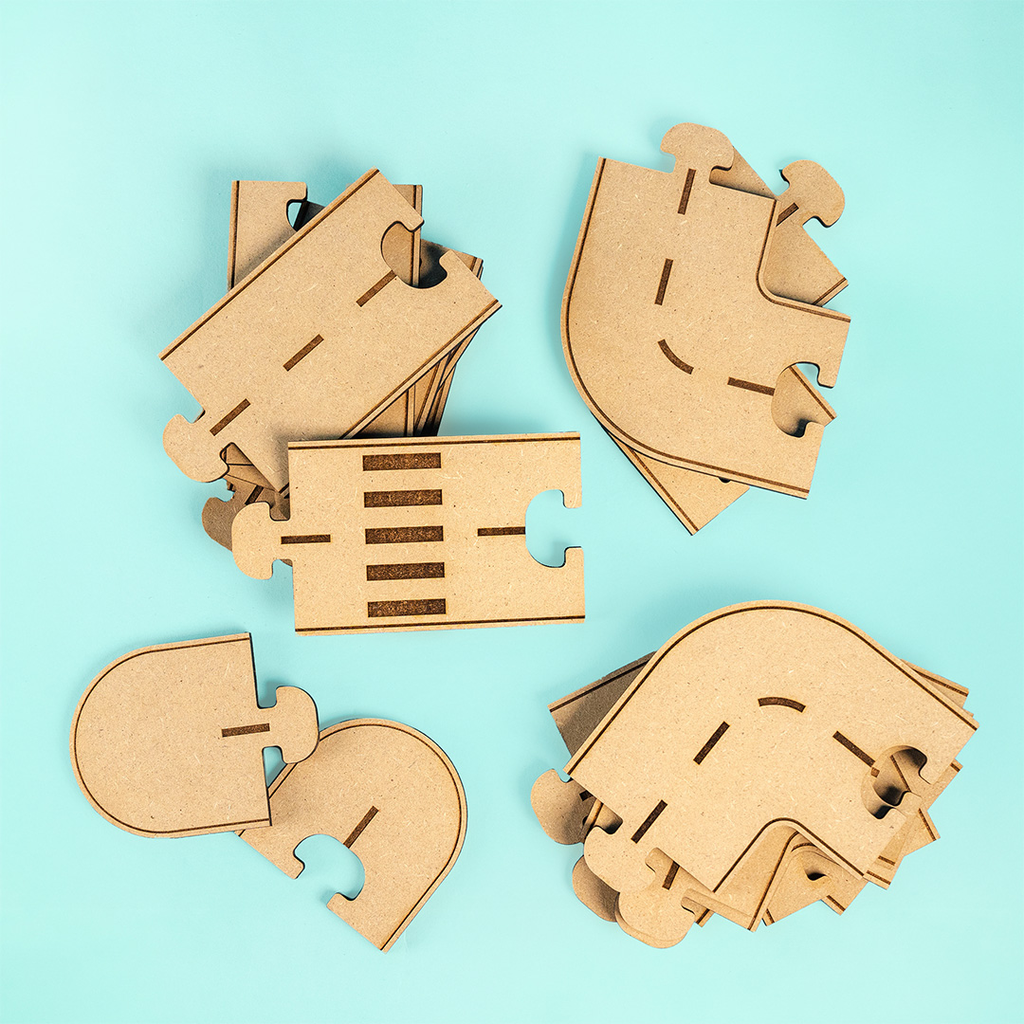
Adventure Track Extension
Extra road pieces to expand your Town. Mix and match with all Town sets.
DKK 249
VIEW PRODUCT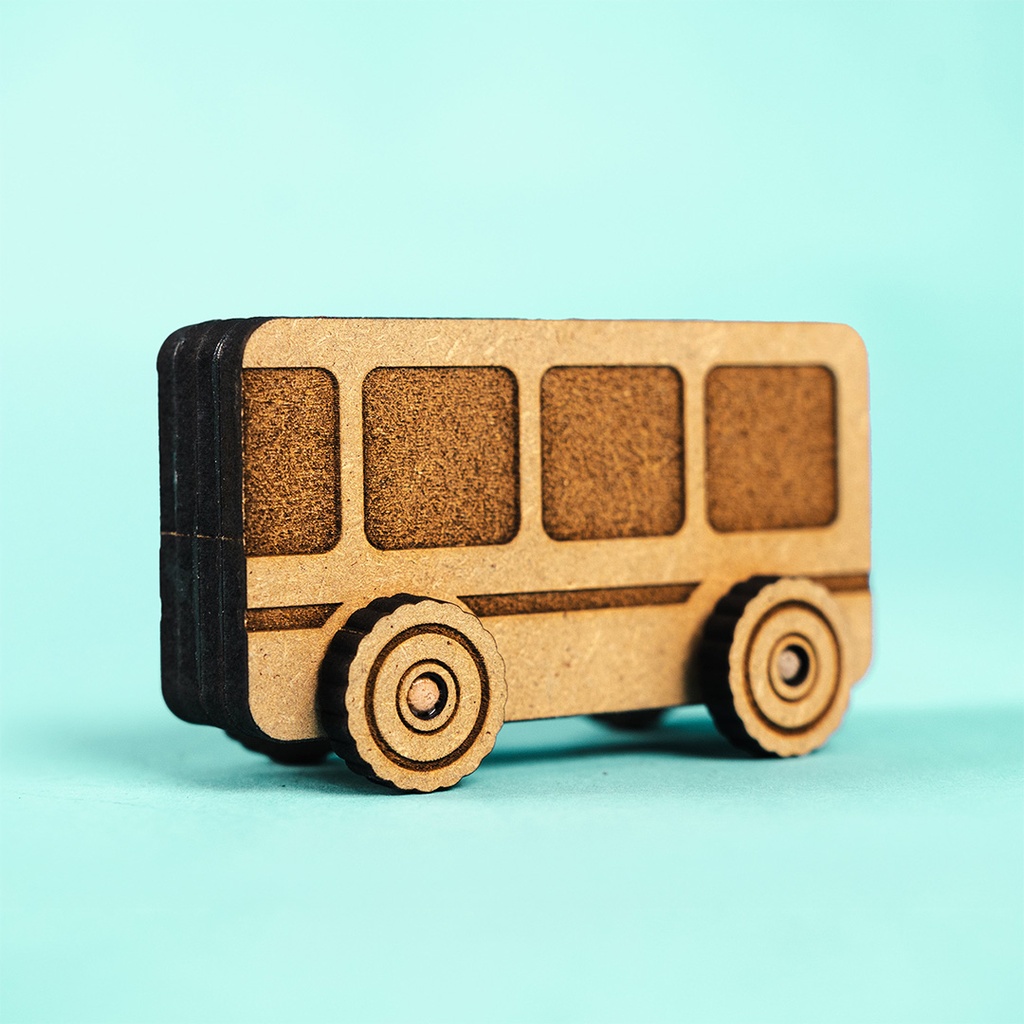
Bus Adventures
Bestseller. The classic town bus for Crateit Town, a perfect way into the Town world, and it works both on its own and with bigger sets.
DKK 49
VIEW PRODUCTAll Crateit toys are designed in Denmark and made from quality wood fibre (MDF/HDF). Parcels are delivered without plastic.
Frequently asked questions
What are modular toys?
Modular toys are made up of smaller parts that can be combined in many different ways. Unlike ready-built playsets, modular toys don't have one right shape: the child is the designer. Crateit Town and Crateit Roomies are good examples.
Why are modular toys better for creativity than fixed toys?
Modular toys invite many combinations, problem-solving and design thinking.
From what age are modular toys suitable?
Modular toys work from around age 2 and up. Younger children practise fine motor skills and cause and effect. Older children build complex scenarios. Crateit Town and Roomies are recommended from age 3.
What is the difference between modular wooden toys and LEGO?
Both are modular and encourage creativity. LEGO is more detailed and building-focused with small parts. Wooden toys like Crateit Town have larger parts, sturdier durability and a focus on role-play. Many families have both.
How do I start a good Crateit collection?
Start with one small set, for example Bus Adventures (DKK 49) or Crossroad Cottage (DKK 249) from Crateit Town. Add new sets over time. The great thing about modular toys is that you don't have to decide everything at once.