
An uncoloured dollhouse is like a blank sheet of paper. It can become exactly what the child wants. Patterns are a good way to get started, because they are easy to repeat and look good even when the lines are not quite straight. Here are ten easy patterns to draw, suited to walls, floors, furniture and the front of the house.
Before you start
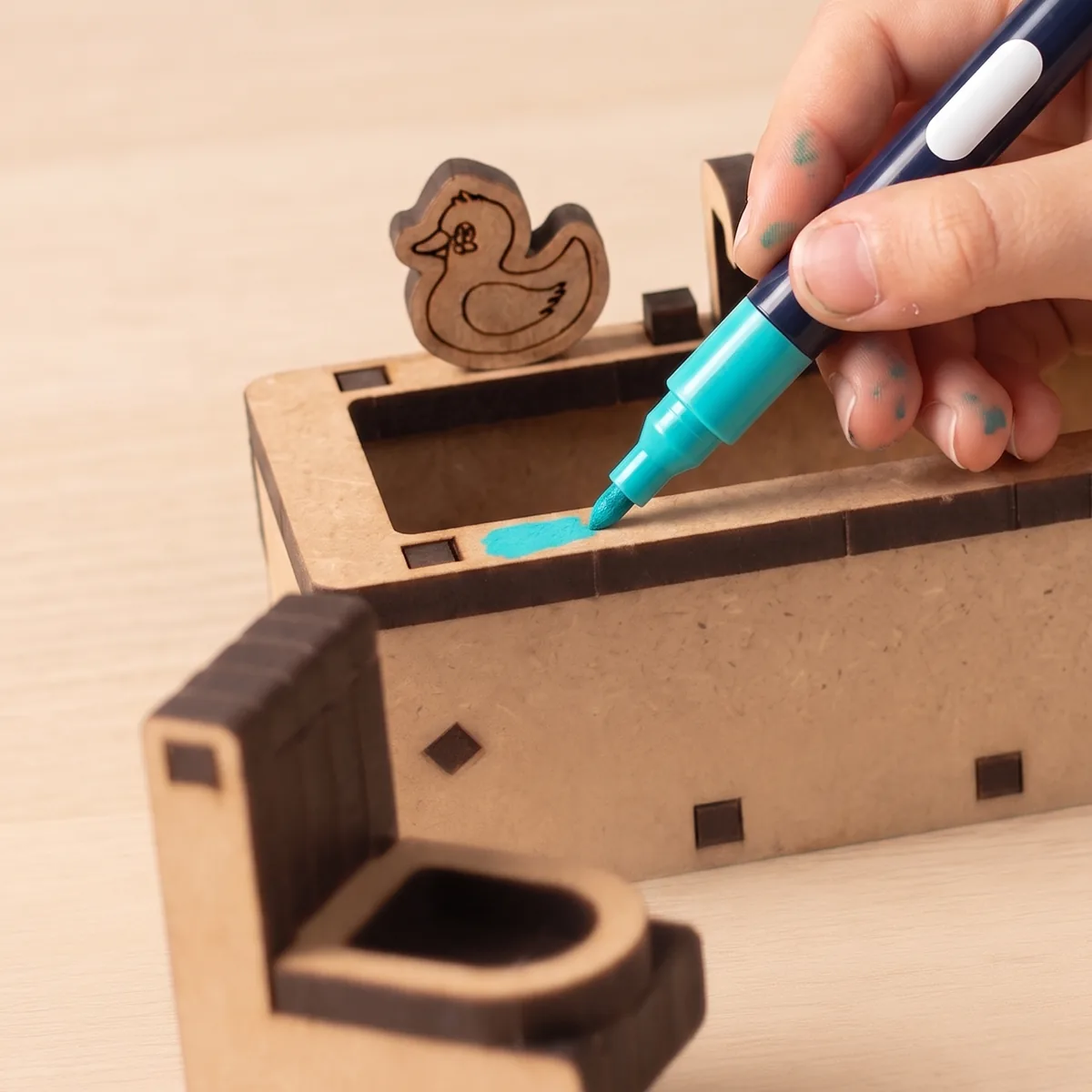
Use the broad tip for large areas and the fine tip for lines and details. It helps to start with the light colours and add the darker ones on top afterwards. And try the pattern on the back of a piece or on a sheet of paper first if the child is unsure.
Patterns for walls and floors
1. Stripes. Vertical stripes on a wall are the easiest pattern of all and look just like wallpaper. 2. Dots. Small dots in one or more colours can fill a whole wall without becoming too much. 3. Checks. Alternating coloured squares are perfect for a kitchen floor. 4. Tiles. Small squares with a thin line between them suit a bathroom well. 5. Planks. Long sections in two shades of the same colour look like a wooden floor.
Patterns for furniture and fabric
6. Flowers. A small circle with five dots around it is a flower, and lots of flowers make a bedspread. 7. Waves. Soft wavy lines suit cushions, curtains and a sofa. 8. Zigzag. A jagged line brings a chair back or an edge to life.
Patterns for the front of the house
9. Bricks. The Roomies houses already have a brick surface on the front, so it is easy to colour the bricks in two or three shades. 10. Stars. Little stars on the roof or above the door make the house ready for evening.
Choose the colours together
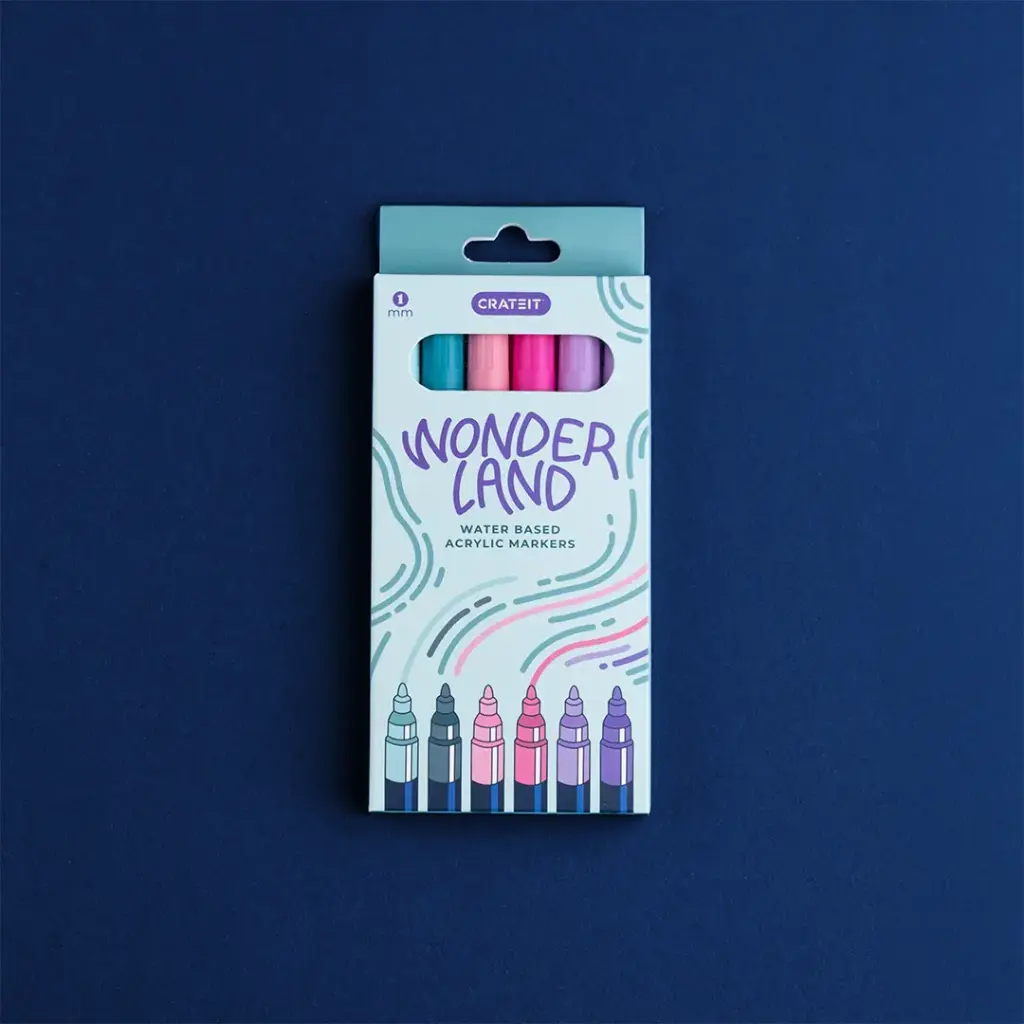
The colours set the mood. Crateit Playful has vibrant primary colours: red, green, yellow, blue, black and brown. Wonderland has fairytale colours, and Forest has forest colours, such as olive green and moss green. Many children mix freely, and that is completely fine.
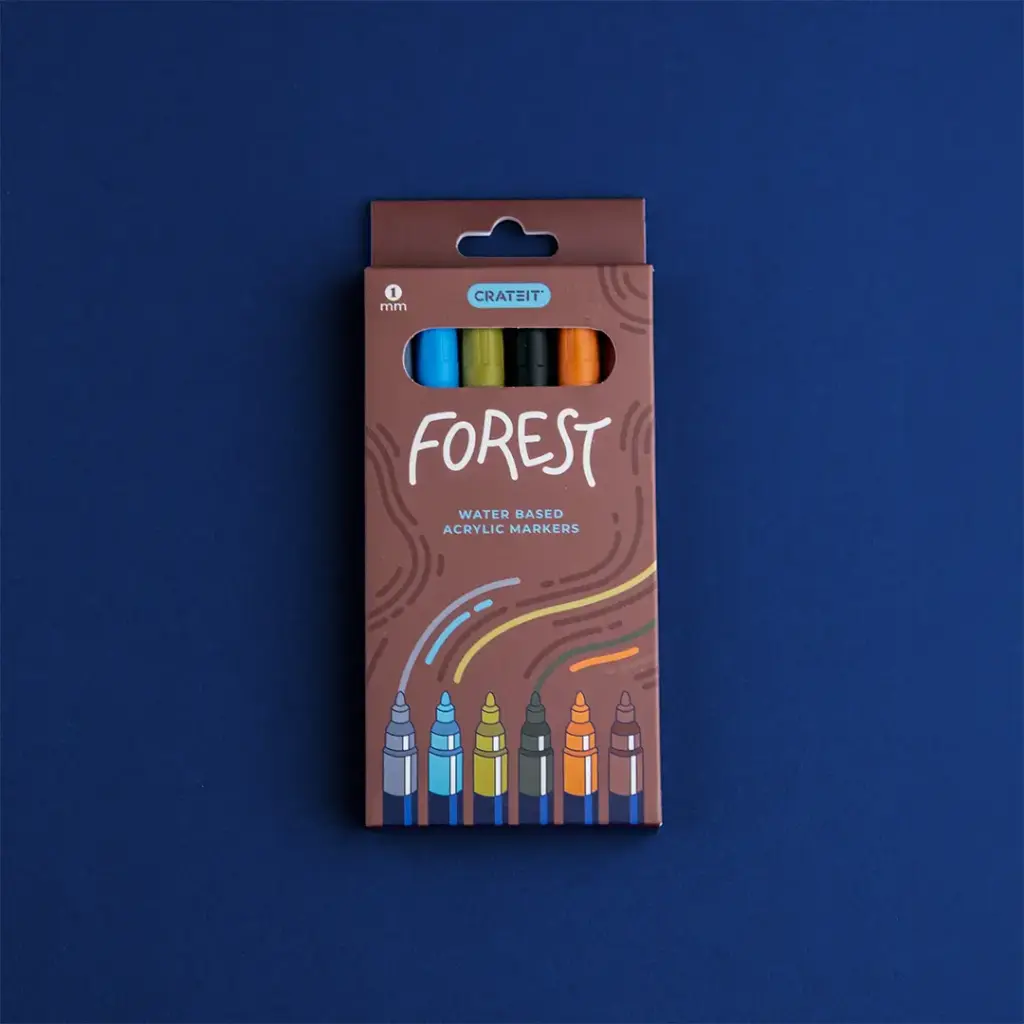
Forest Markers 1 mm
Six markers in forest colours, such as olive green and moss green, with a fine tip.
View product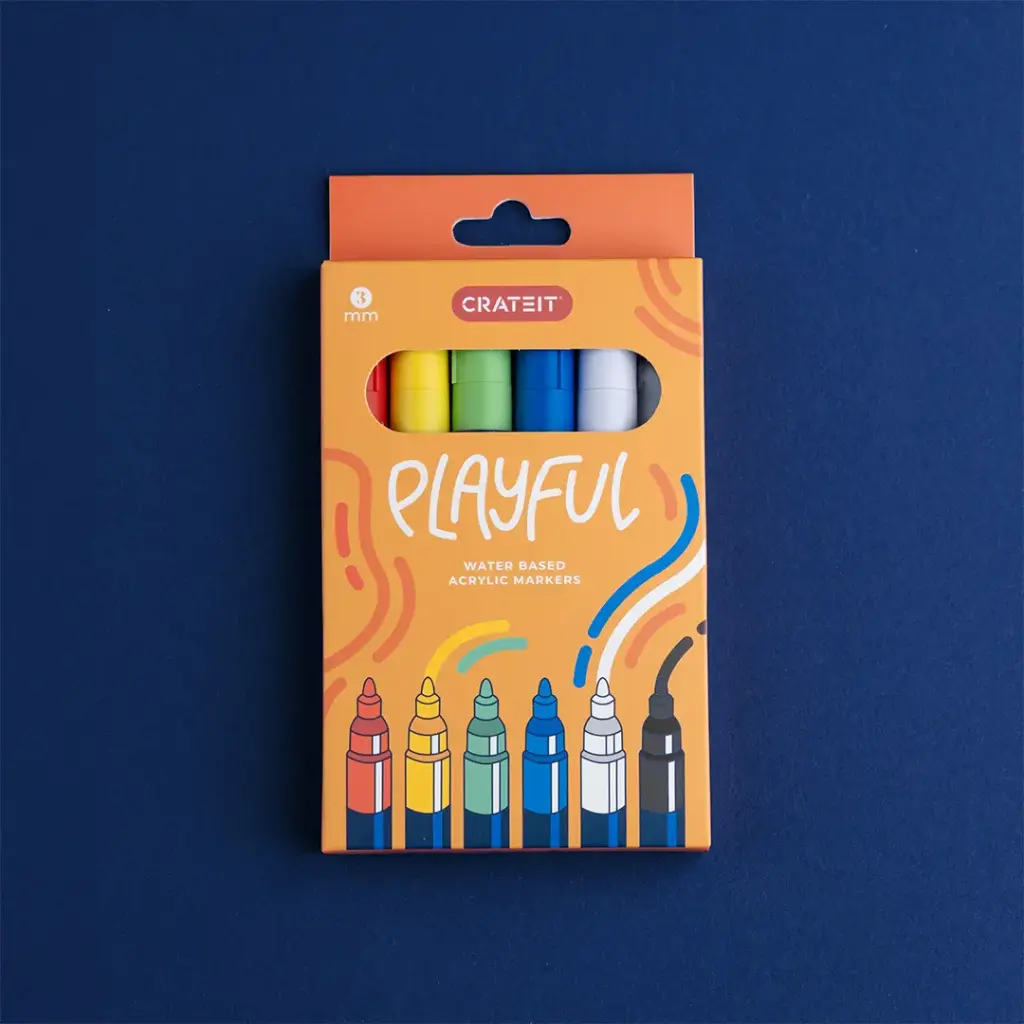
Playful Markers 3 mm
Six markers in vibrant primary colours with a broad tip for the larger surfaces.
View productCan you recolour?
Yes. You can colour on top when it is time for a new style, so the dollhouse can get new patterns as the child grows and has new ideas. That is one of the reasons the toys arrive uncoloured.
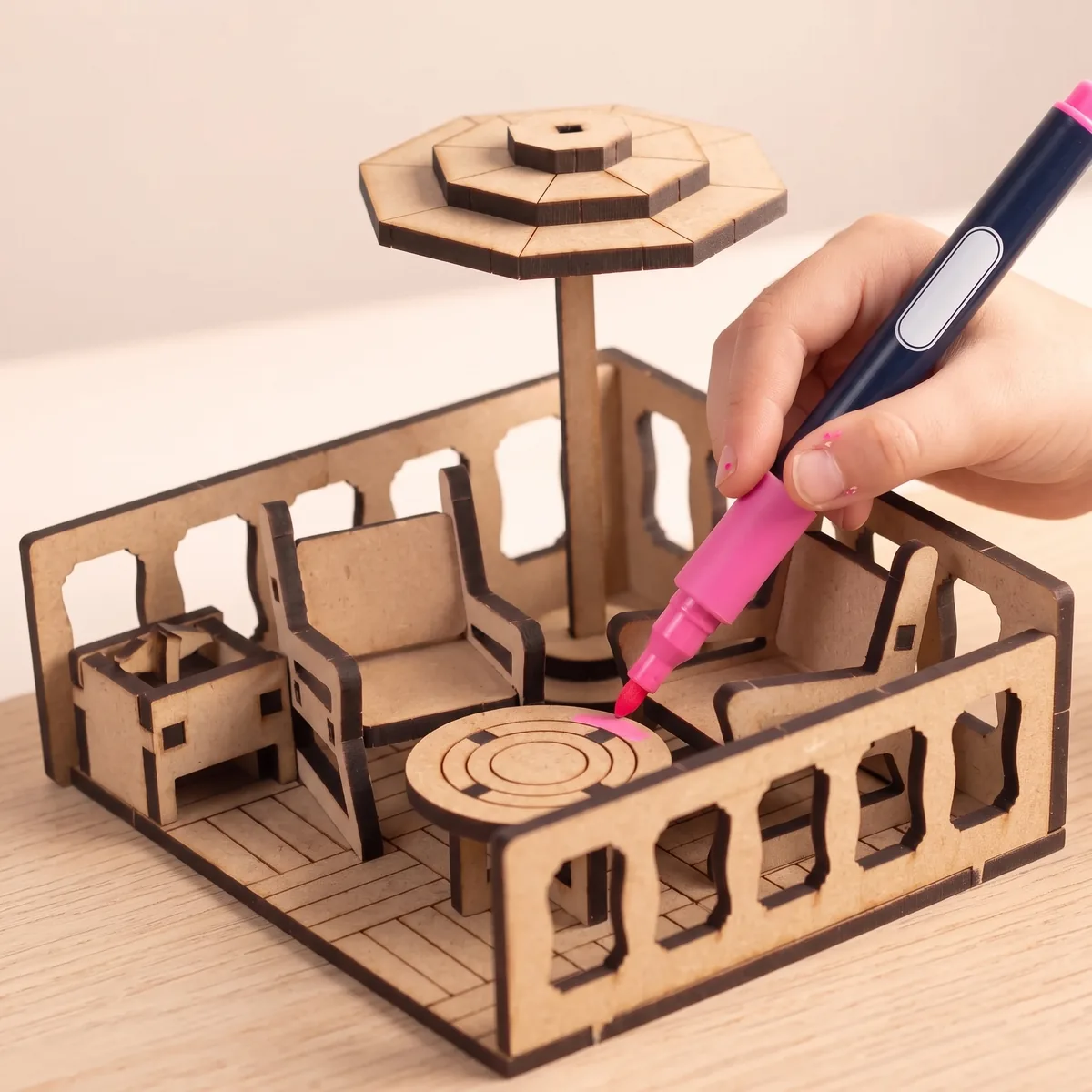
The Cloud Office
An office and a balcony across two floors. Thomas, dad in the Roomies family, is included.
View product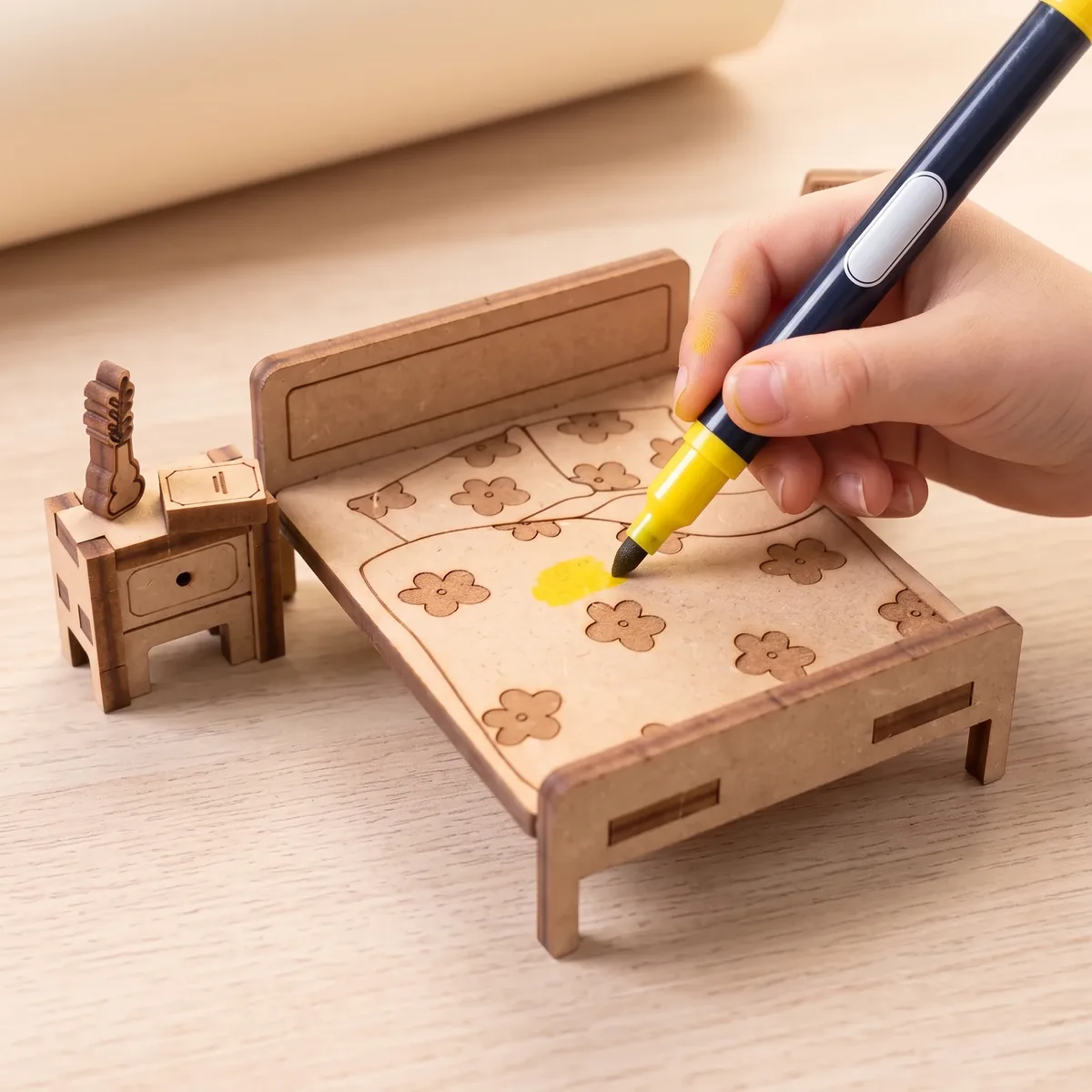
Breakfast in Bed
A kitchen and a bedroom across two floors. Camilla, mum in the Roomies family, is included.
View productLittle tricks for neat patterns
A few little tricks make it easier. Let the colour dry for a moment before drawing a new pattern on top, so the colours do not run together. Hold the marker upright for dots, and tilt it slightly for long lines. And draw the pattern in the same direction all the way across a surface, so it looks calmer.
If a line does not come out straight, it can often become part of the pattern. A wavy stripe is still a stripe.
One pattern per room
A good place to start is giving each room its own pattern. The kitchen in Breakfast in Bed can have checks on the floor, the bathroom in The Bubble Nest can have tiles, and the living room in Couch & Crayons can have waves on the sofa. That makes it clear where you are in the house, and moving the figures from room to room becomes more fun.
Keep the best patterns
When a pattern turns out really well, it can be fun to take a photo of it before it is perhaps coloured over. That gives the child a little collection of their own patterns, which can be used again on a new piece of furniture or in a new room. Many children get new ideas from seeing what they did last time.
See all the markers in markers and accessories, and the whole dollhouse series in Crateit Roomies.