A children's room has to do a lot at once. It is a place to sleep, a place to wind down and a place to play. And ideally it should not look as if a toy shop has exploded every time you open the door. Here are seven ideas for a kids room that start with play rather than with furniture.
1. Give the floor back to play
Most children play on the floor. So the first step is often to take something away rather than add something. A free spot in the middle of the room, ideally with a soft rug, is an invitation to build, set things up and play out stories. With the large furniture along the walls, there is more space than you would think.
2. Keep toys at the child's height
If children can see and reach their toys, they use them. Low shelves and open boxes let them choose for themselves and, just as important, tidy up for themselves. Toys at the top of a bookcase rarely get played with.
3. Have fewer things out at once
A room with everything out is hard to play in, because there is too much to choose from. Try keeping a smaller share of the toys out and putting the rest away. When something has been away for a couple of weeks, it feels almost new when it comes back. This works in small rooms too.
4. Calm colours on the walls, colour in the play
Many parents choose calm colours for the walls and let the colour come from the toys, the books and the child's own drawings. It gives a room that does not become tiring to look at, and that can keep up as the child grows.
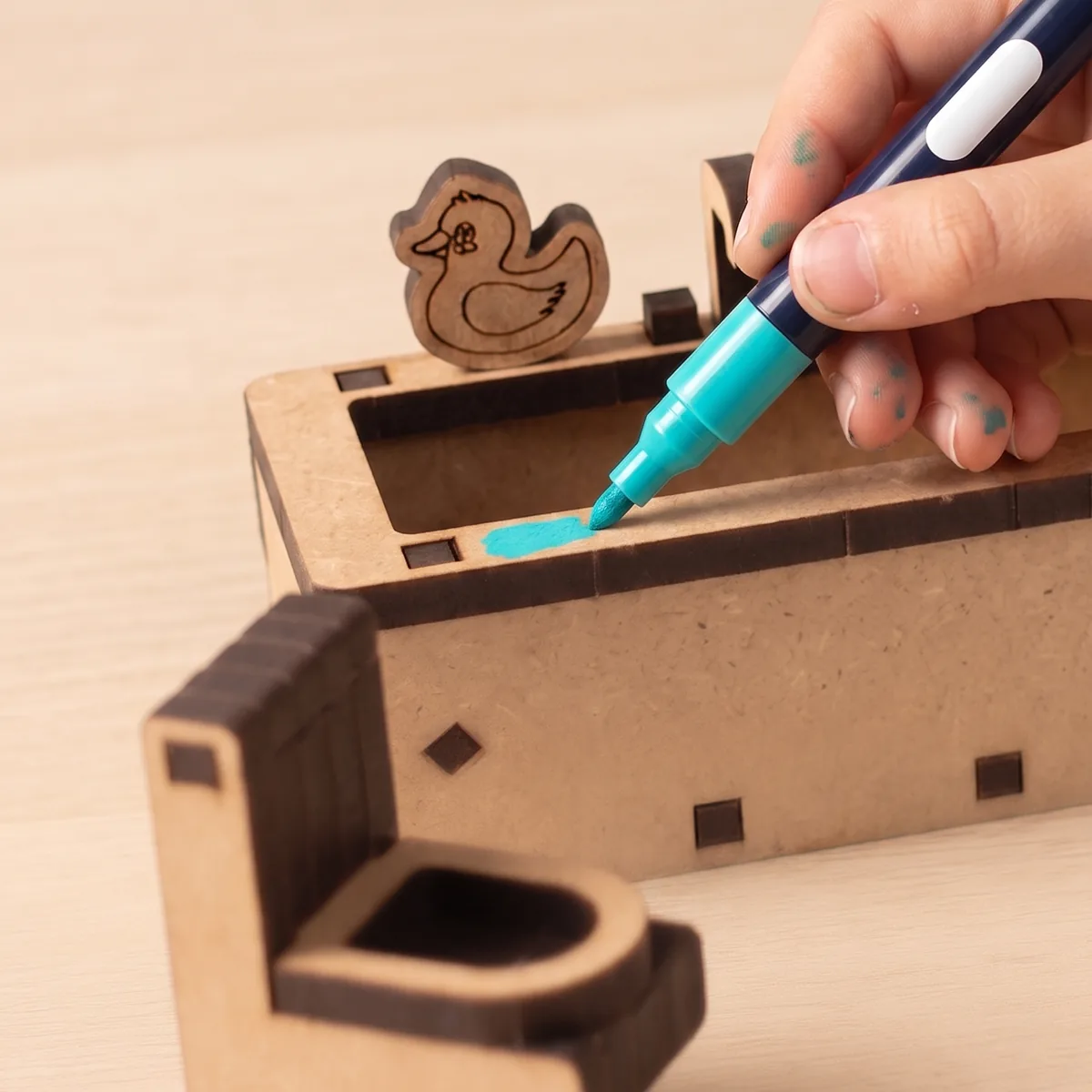
Crateit toys arrive uncoloured. That means the child decides the colours, and the toys fit into almost any room. The colours are added as the play goes along.
5. Make a quiet corner
Besides space to play, most children need somewhere to retreat to a little. It could be a nook with cushions, a tent or simply a lamp and a basket of books. It does not need to take up much space, but it is good to have.
6. Choose toys that can be built on
Toys that can be extended last longer in a children's room than toys that are finished the moment they are unpacked. Crateit Roomies are small wooden dollhouses across two floors, where each set has its own rooms and its own figure. The sets can stand side by side, so the house can grow when a new room is added.
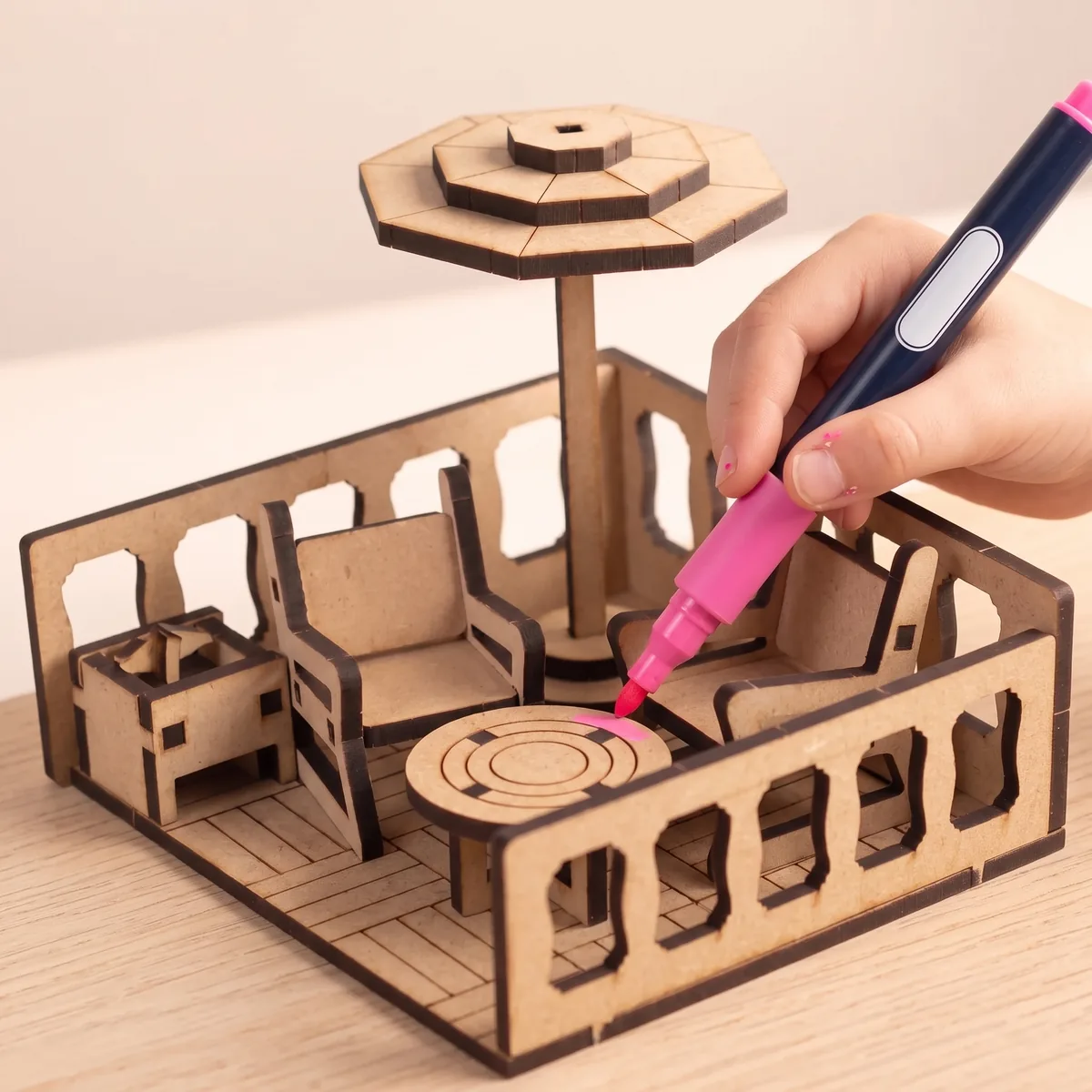
The Cloud Office
An office and a balcony across two floors. Thomas, dad in the Roomies family, is included.
View product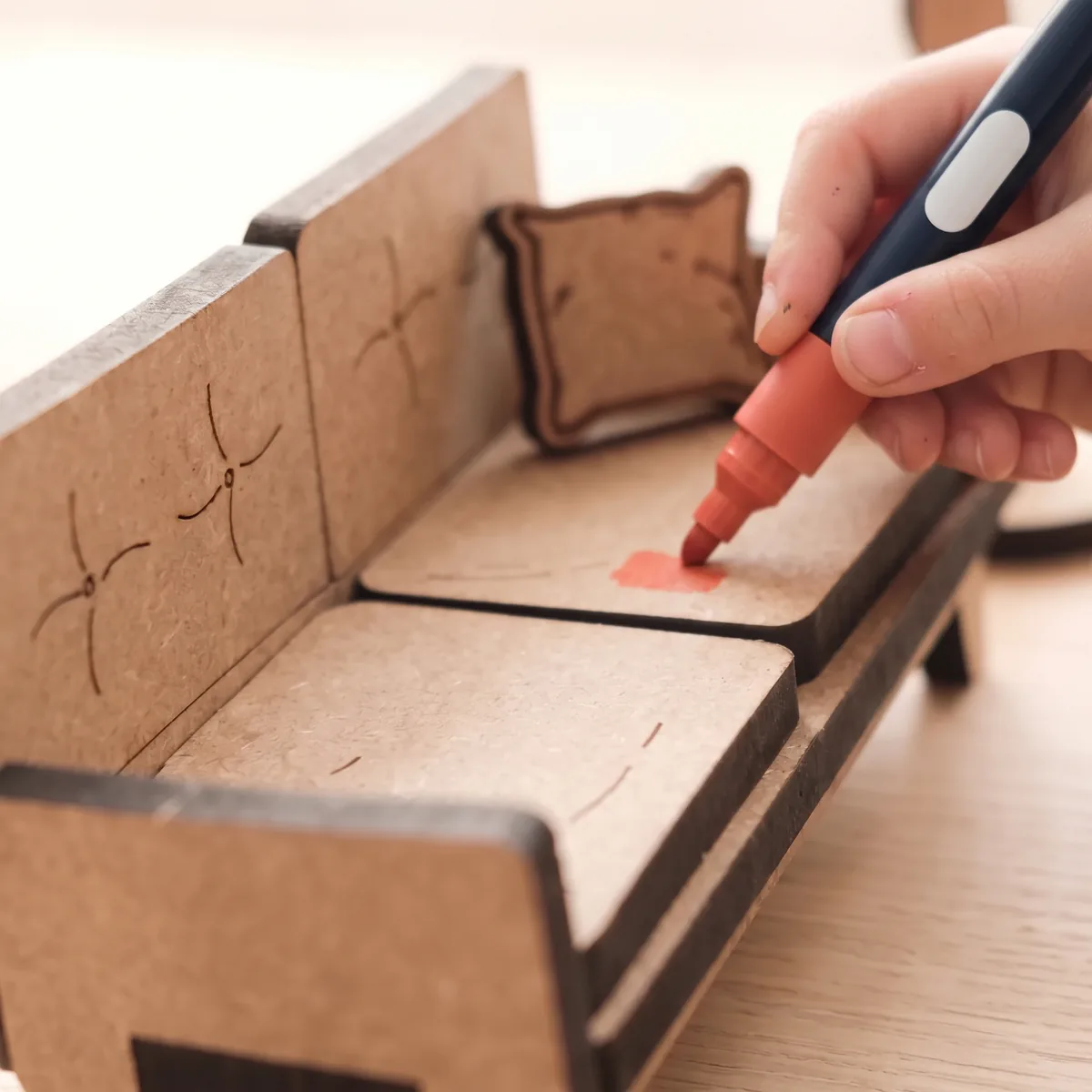
Couch & Crayons
A living room and a playroom across two floors. Emma is included along with a rocking horse.
View product7. Let the child have a say
A room feels more like the child's own when the child has helped choose. It can be small things: where the teddy sits, which poster goes up, or what colour the dollhouse sofa should be. It is often in the small choices that a child makes the room their own.
Think in zones, even in a small room
It helps to divide the room into a few zones: a place to sleep, a place to play and a place to draw or read. The zones do not need furniture between them. A rug, a lamp or a bookcase can be enough to show what happens where. When the toys have their own zone, it is also easier to see when things are tidy.
A small table at the child's height is a good investment. It gets used for drawing, for colouring toys and for setting up a game that should not be on the floor. And it is often here that the smaller things, like markers and small figures, get their fixed place.
Let the room grow with the child
A room for a three-year-old looks different from a room for a seven-year-old. So it pays to choose furniture that lasts and let the details change. Posters, rugs and toys can be swapped, while the bed, shelves and table stay. That way the room can keep up without a big makeover every other year.
Want to read more about choosing fewer but better things? Read our post on minimalist toys. And to see the whole series, take a look at Crateit Roomies.