When siblings share a room, it has to do everything an ordinary kids room does, just for two. There needs to be space to play together, but also to have something that is your own. Here are ideas for a shared kids room that make everyday life a little easier.
Give each child their own corner
Even in a small room, each child can have something that is theirs. It could be a shelf, a box or the space by the bed. Knowing there is a place where your things are left alone brings a sense of calm.
A shared play zone in the middle
With the beds and shelves along the walls, the middle of the room becomes shared. A rug on the floor marks where play happens and makes it clear that it is a place for both.
When there is an age gap
With several years between them, the children often need different things. Toys with small parts can go higher up, where only the eldest can reach. Crateit Roomies are recommended from 5 years, so with younger siblings it can be a good idea to keep them somewhere the eldest decides when they come out.
Play that can be shared
Some toys work well because they can be both shared and your own. With two Roomies houses, each child can have their own house with their own figure, and when they want to play together, the houses can stand side by side. Couch & Crayons and Breakfast in Bed are the wide houses at 24 x 48 cm, while The Bubble Nest and The Cloud Office are 24 x 24 cm.
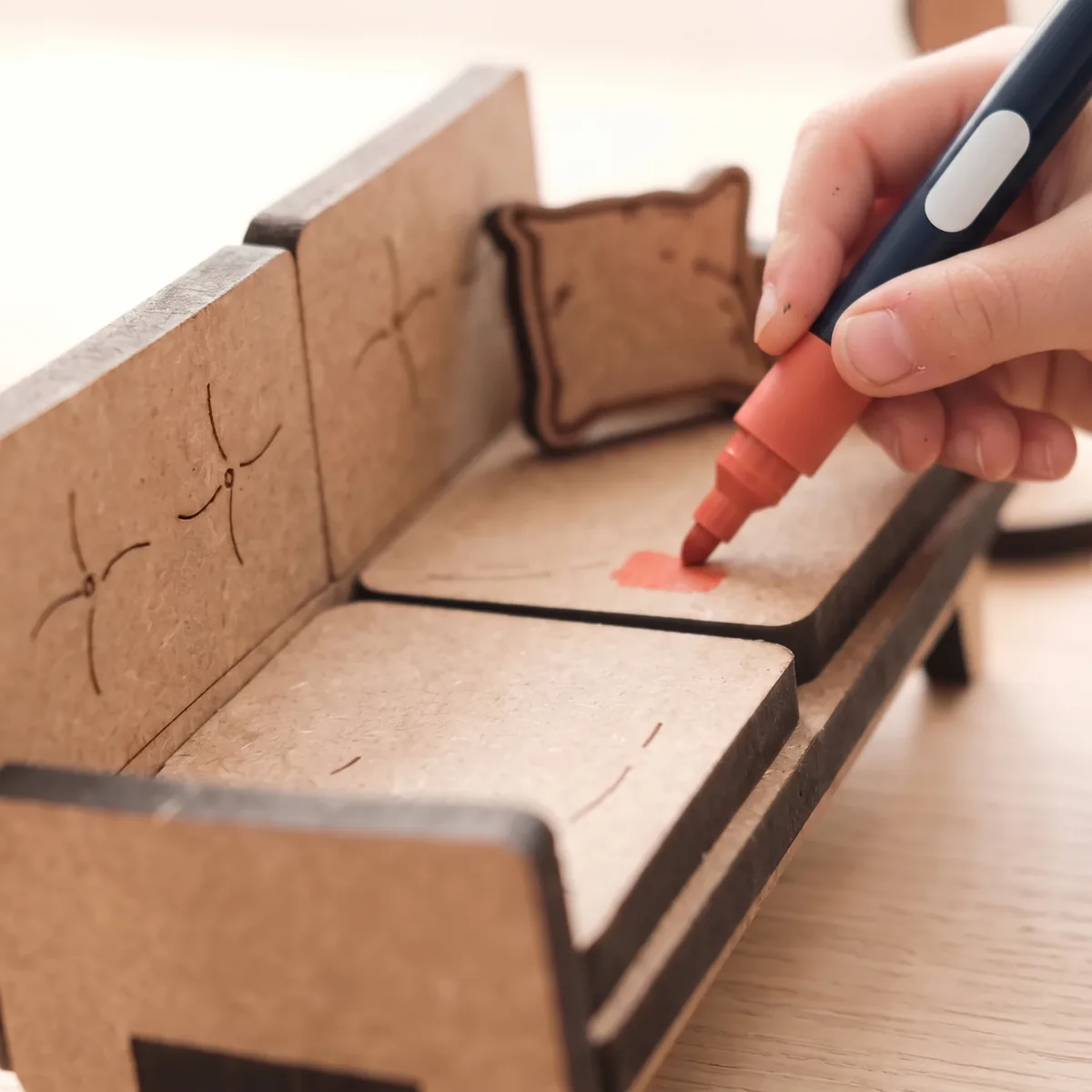
Couch & Crayons
A living room and a playroom across two floors. Emma is included along with a rocking horse.
View product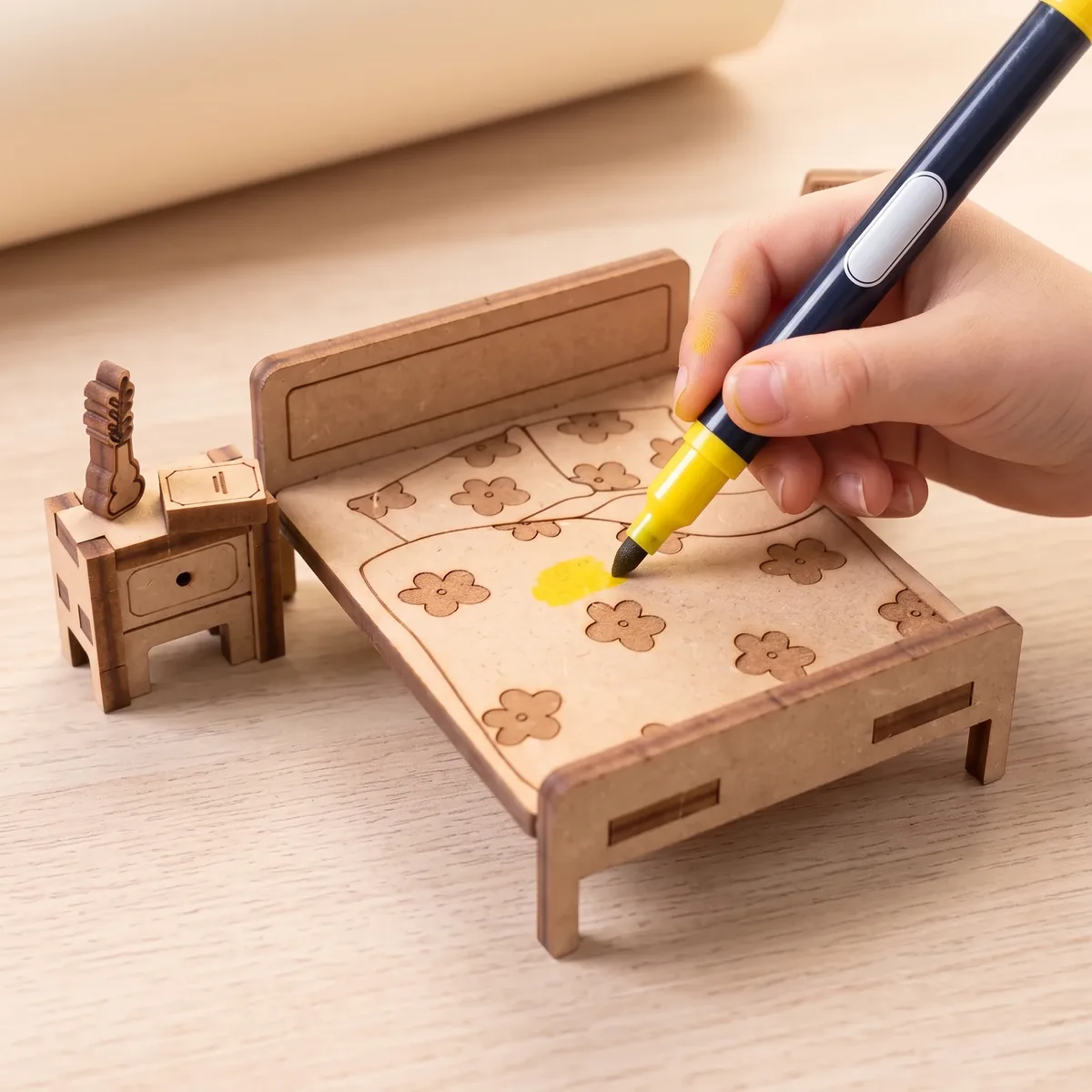
Breakfast in Bed
A kitchen and a bedroom across two floors. Camilla, mum in the Roomies family, is included.
View product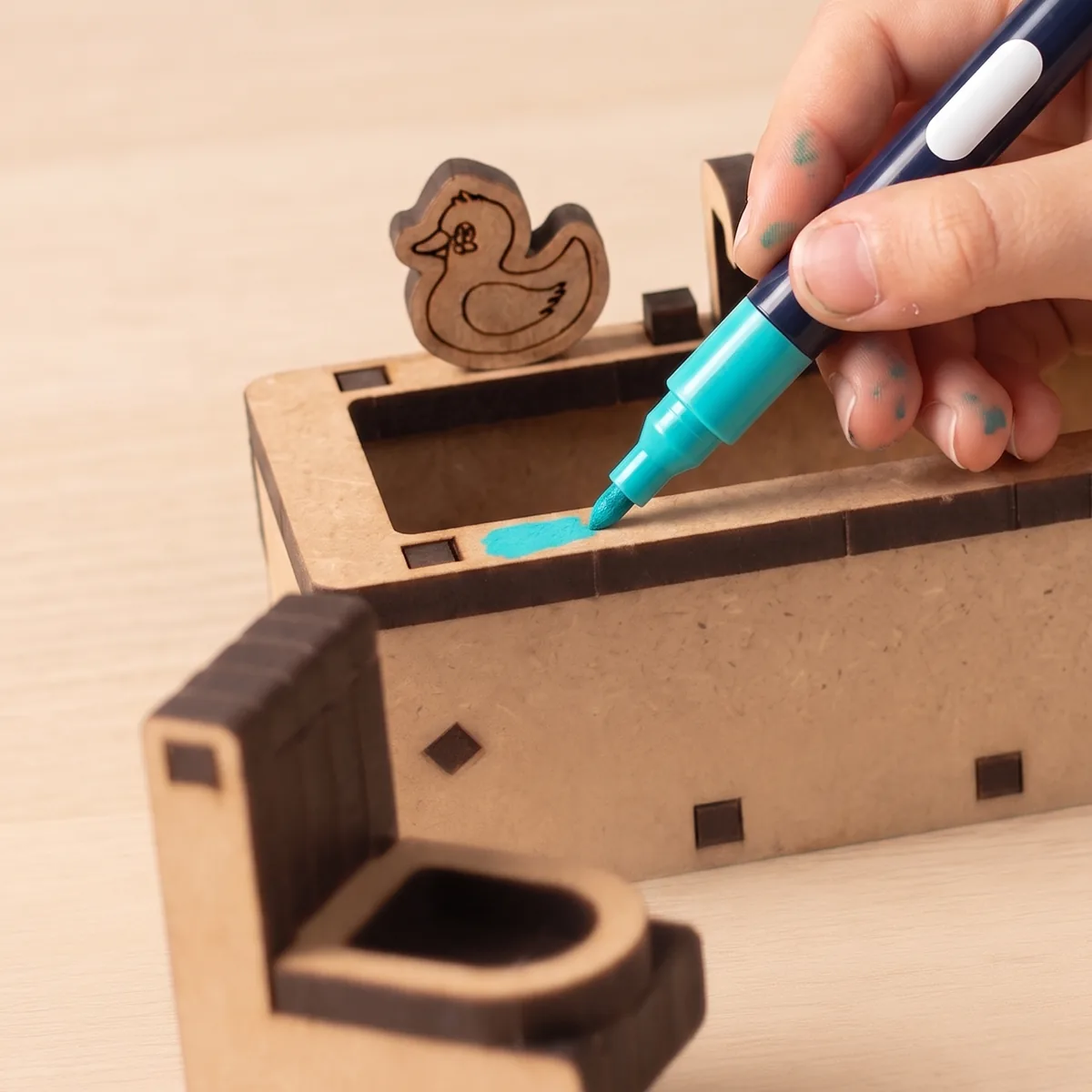
Quiet in the evening
If siblings have different bedtimes, a small lamp by each bed helps, so one can read while the other sleeps. A curtain or a bookcase between the beds can also give a little more peace.
Agree on the rules together
A shared room works best when everyone knows the rules. Can you borrow the other child's things? Who tidies up after a game you played together? Rules are easier to keep when you helped make them.
Room for separate games
Even siblings who love playing together need to play separately now and then. That can be hard in a shared room, where one wants to build while the other wants to draw. It helps if there are two places to play: the floor and a small table, or two corners with a rug each.
It can also help to agree that a game left set up belongs to whoever built it until it is finished. That keeps the peace around what is under way.
When they want to play together
Playing together is often the best part of sharing a room. A few good conditions make it easier: enough floor space, toys that several can use at once, and an agreement about who tidies what afterwards. Towns and dollhouses with several rooms and several figures work well, because each child can run their own part of the story.
In Crateit Roomies there are four figures in the family: Camilla and Thomas, who are mum and dad, and the children Max and Emma. That gives enough roles for two children to share between them.
When a new sibling moves in
When a child is about to share a room with a new brother or sister, it can be a big change. It helps to involve the eldest in setting up the room and let them choose where their own things go. Then it feels less like losing something and more like getting a new room. And let the eldest keep one or two things that are only theirs.
Also read why the open choice is betterif you want to know more about toys that can be built on.